- Ph.D., Washington University School of Medicine, St. Louis
Carissa Krane
Professor; Acting Chair, Department of Biology; Associate Dean for Faculty Affairs, Research and Scholarship
Full-Time Faculty
College of Arts and Sciences:
Office of the Dean, Biology
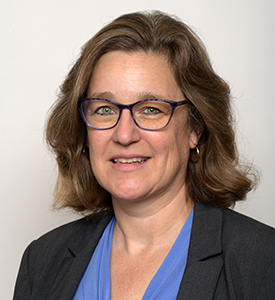
Carissa Krane
Professor; Acting Chair, Department of Biology; Associate Dean for Faculty Affairs, Research and Scholarship
Full-Time Faculty
College of Arts and Sciences:
Office of the Dean, Biology
Degrees
Administrative role
Dr. Carissa M. Krane is the Associate Dean for Faculty Affairs in the College of Arts and Sciences. In this role, she works with faculty across the College to support faculty hiring, new faculty programming, faculty development, faculty awards and tenure and promotion review processes. She also supports faculty research, scholarship and artistic activities, and serves as the point person in the Dean’s office for faculty submitting internal and extramural grant, contract, fellowship and other proposals.
Profile
Dr. Carissa M. Krane earned an Honors Bachelor of Science degree in Biochemistry/Molecular Biology from Marquette University in Milwaukee and a Doctoral degree in Biology and the Biomedical Sciences: Molecular Genetics from Washington University School of Medicine, in St. Louis, Mo. Following a Post-doctoral fellowship in Molecular Physiology at the University of Cincinnati College of Medicine, Cincinnati, Dr. Krane joined the University of Dayton Department of Biology in 2001. Dr. Krane’s has received research funding from the American Lung Association, NIH-NHLBI, NSF-IOS, and the NEH, and through industrial contracts. Dr Krane has served as the President and Vice President of the UD Academic Senate, the University Honors Program Associate Director for Honors Thesis Research and the inaugural Schuellein Endowed Chair in the Biological Sciences.
Dr. Krane delivers upper-level undergraduate lecture and laboratory courses in Physiology (BIO 403 Physiology I and BIO 403L Physiology Lab, BIO 404 Physiology II) and is active in mentoring graduate and undergraduate students in her laboratory.
Research interests
- Vertebrate Fluid Homeostasis
- Vertebrate Freeze Tolerance
- Aquaporins
- Ecophysiology
- Molecular Physiology
Cryopreservation: Cold acclimation and Freeze Tolerance in Cope's Gray Treefrog, Dryophytes chrysoscelis
Some organisms inhabiting regions with sub-freezing temperatures are intolerant of freezing and avoid ice formation by mechanisms such as supercooling. Others, like Cope's gray treefrog Dryophytes chrysoscelis, tolerate actual freezing and implement mechanisms that minimize damage from the formation of ice crystals. Among these are the accumulation of solutes that may serve a variety of functions, including cryoprotection (stabilization of protein and/or membrane structure and function) and osmotic agent (regulating the distribution of water between intracellular and extracellular fluids).
My main area of research explores questions related to the physiological control of water and ion homeostasis in vertebrates. The graduate and undergraduate students who work with me in my laboratory, use the tools of molecular biology, cell biology, biochemistry, bioinformatics, comparative physiology and ecophysiology to address specific questions regarding freeze tolerance (the capacity for some animals to survive freezing and thawing).
Broader Impacts: The proposed studies combine research in two areas of great interest and intrigue. Cryobiology not only readily captures the imagination, it also has broad applicability, from responses of organisms to changing thermal environments resulting from climate change, to biomedical applications related to reproduction, cryopreservation of organs and tissues for transplantation. Ecophysiology, an inherent yet emerging field of interest, seeks to integrate our mechanistic understanding of how changing extreme environmental conditions impact short- and long-term physiological responses required for survival. The integration of these two higher order pursuits is especially timely and important for understanding the evolutionary limitations and physiological plasticity necessary for a freeze-tolerant competency in the face of changing environmental pressures.
Selected publications
Yokum, EE, Goldstein, DL, and Krane, CM. (2023) “Nobel observations of ‘freeze resistance’ and dynamic blue and green dorsal coloration in frozen and thawing Dryophytes chrysoscelis.” Journal of Experimental Zoology: Part A, 339(10): 1044-1051. doi.org/10.1002/jez.2753
Yokum, EE, Wascher, M, Goldstein, DL, and Krane, CM. (2023) “Repeated freeze-thaw cycles in freeze tolerant treefrogs: novel interindividual variation of integrative biochemical, cellular, and organismal responses.” American Journal of Physiology – Regulatory, Integrative, and Comparative Physiology, 324: R196-R206. doi:10.1152/ajpregu.00211.2022
do Amaral MCF, Frisbie J, Crum RJ, Goldstein DL, Krane CM. Hepatic transcriptome of the freeze-tolerant Cope’s gray treefrog, Dryophytes chrysoscelis: responses to cold acclimation and freezing. BMC Genomics, 2020; 21, 226. https://doi.org/10.1186/s12864-020-6602-4
Geiss L, do Amaral MCF, Frisbie J, Goldstein DL, Krane CM. Postfreeze viability of erythrocytes from Dryophytes chrysoscelis. J Exp. Zool, 2019;331:308–313. doi:10.1002/jez.2262
do Amaral MCF, Frisbie J, Goldstein DL, Krane CM. The cryoprotectant system of Cope’s gray treefrog, Dryophytes chrysoscelis: responses to cold acclimation, freezing, and thawing. J Comp Physiol B, 2018;188:611–621. doi:10.1007/s00360-018-1153-6
Crum, R. J., Diestelkamp, W. S., Krane, C.M. (2018). PravastatinTM suppresses venous shear stress-dependent induction of Aquaporin 1. BIOS, 89(4), 11 pages.
Stogsdill B, Frisbie J, Krane CM, Goldstein DL. Expression of the aquaglyceroporin HC-9 in a freeze-tolerant amphibian that accumulates glycerol seasonally. Physiol Rep, 2017;5(15),e13331. doi:10.14814/phy2.13331
Mutyam, V., Puccetti, M.V., Frisbie, J., Goldstein, D.L., and Krane, C.M. (2011) "Endo-Porter mediated delivery of morpholinos in erythrocyte suspension cultures from Cope’s gray tree frog, Hyla chrysoscelis." BioTechniques, 50(5):329-332.
Mutyam, V., Puccetti, M.V., Frisbie, J., Goldstein, D.L., and Krane, C.M. (2011) "Dynamic regulation of aquaglyceroporin expression in erythrocyte cultures from cold- and warm-acclimated Cope’s gray treefrog, Hyla chrysoscelis." J. Expt. Zoology: Part A, 315:424-437.
Goldstein, D.L., Frisbie, J., Diller, A., Pandey, R.N. and Krane, C.M. (2010) "Glycerol uptake by erythrocytes from warm- and cold-acclimated Cope’s gray treefrogs." J. Comp. Physiol. B. 180(8):1257-1265.